Root canal treatment under the microscope
In a root canal treatment, inflamed or infected tissue is removed from inside the tooth. The aim is to keep your own tooth.
Learn moreRetreatment
If a tooth that has had root canal treatment causes problems again, the treatment can be repeated. This is called retreatment.
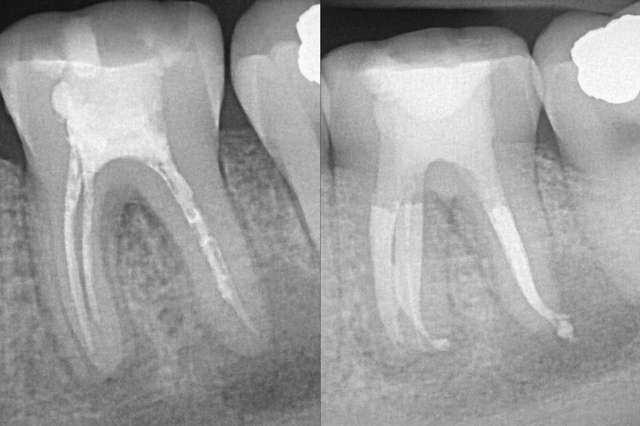 X-ray: root canal retreatment on tooth 36
Retreatment means redoing an existing root canal treatment. It is needed when an earlier treatment was not successful or the tooth has become infected again.
Signs can be renewed pain, pressure when biting, swelling, or a change at the root tip on an X-ray. Retreatment is often the chance to keep a tooth that would otherwise be extracted or replaced with an implant.
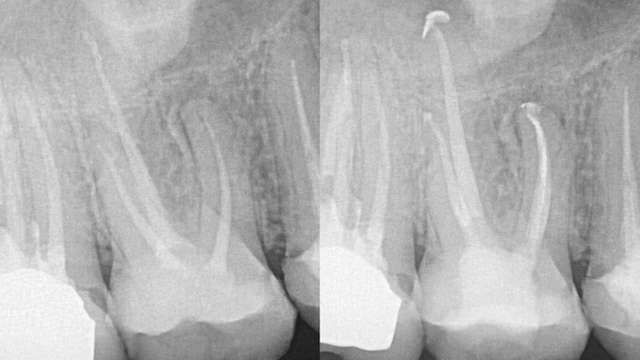 X-ray: root canal retreatment in a single visit
Retreatment is often more complex than the first root canal treatment. Broken instruments, old filling materials or calcified canals call for experience, the microscope and special instruments. That is why it should be done by an experienced endodontist.
If the root tip is infected or damaged and root canal treatment has not worked, an apicoectomy can help. In this small surgical procedure, the tip of the root is removed.
Book your appointment online or give us a call. We are happy to treat you in English.